One Page. Four Products. Your Branding. One Minute.
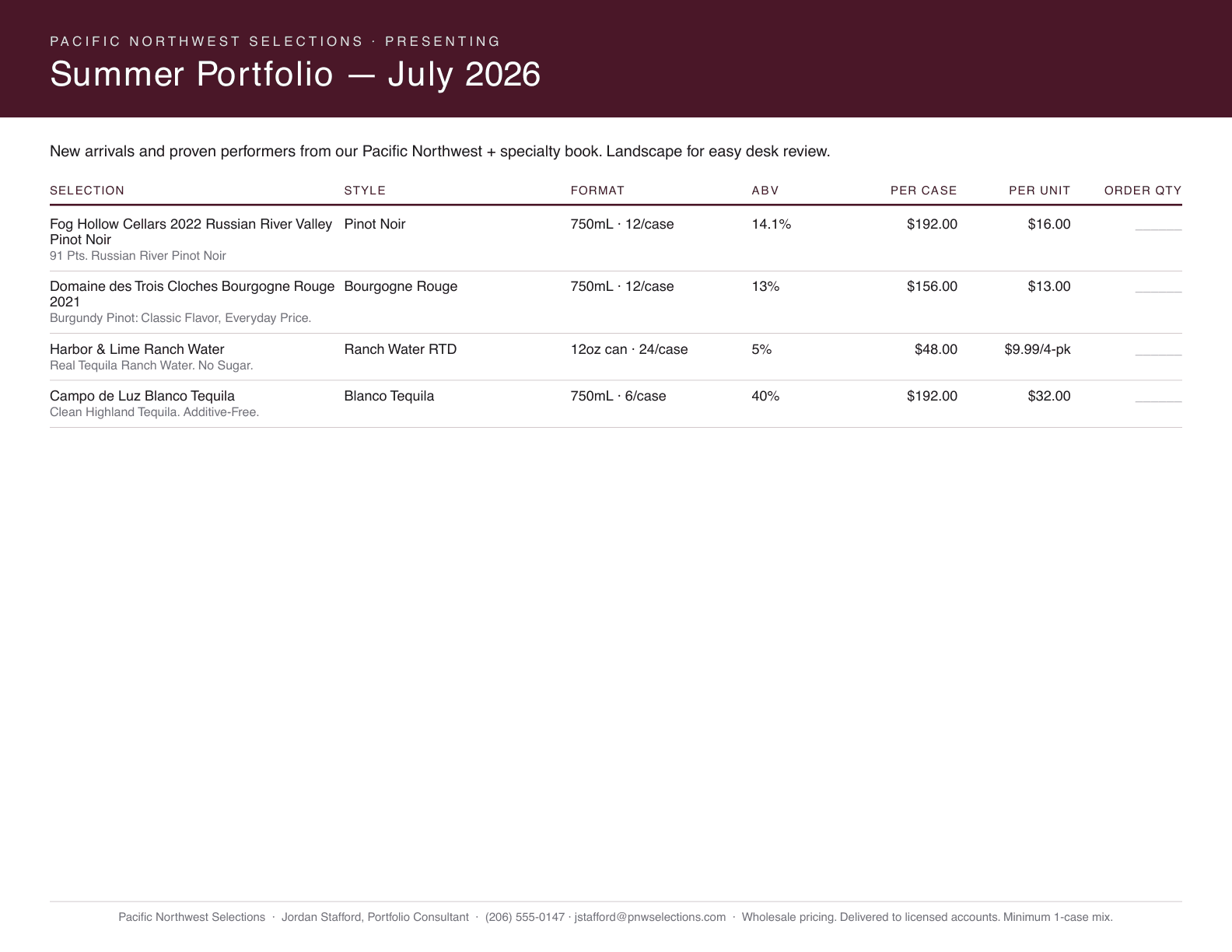
Your buyer moved the meeting up to this afternoon. You've got four wines to walk in with and no sell sheet — just a stack of winery PDFs that don't match each other, tasting notes buried in an email thread from March, and forty-five minutes before you need to be in the car.
Give Pour Sheet the four products you're carrying. Here's what walked out the door instead:
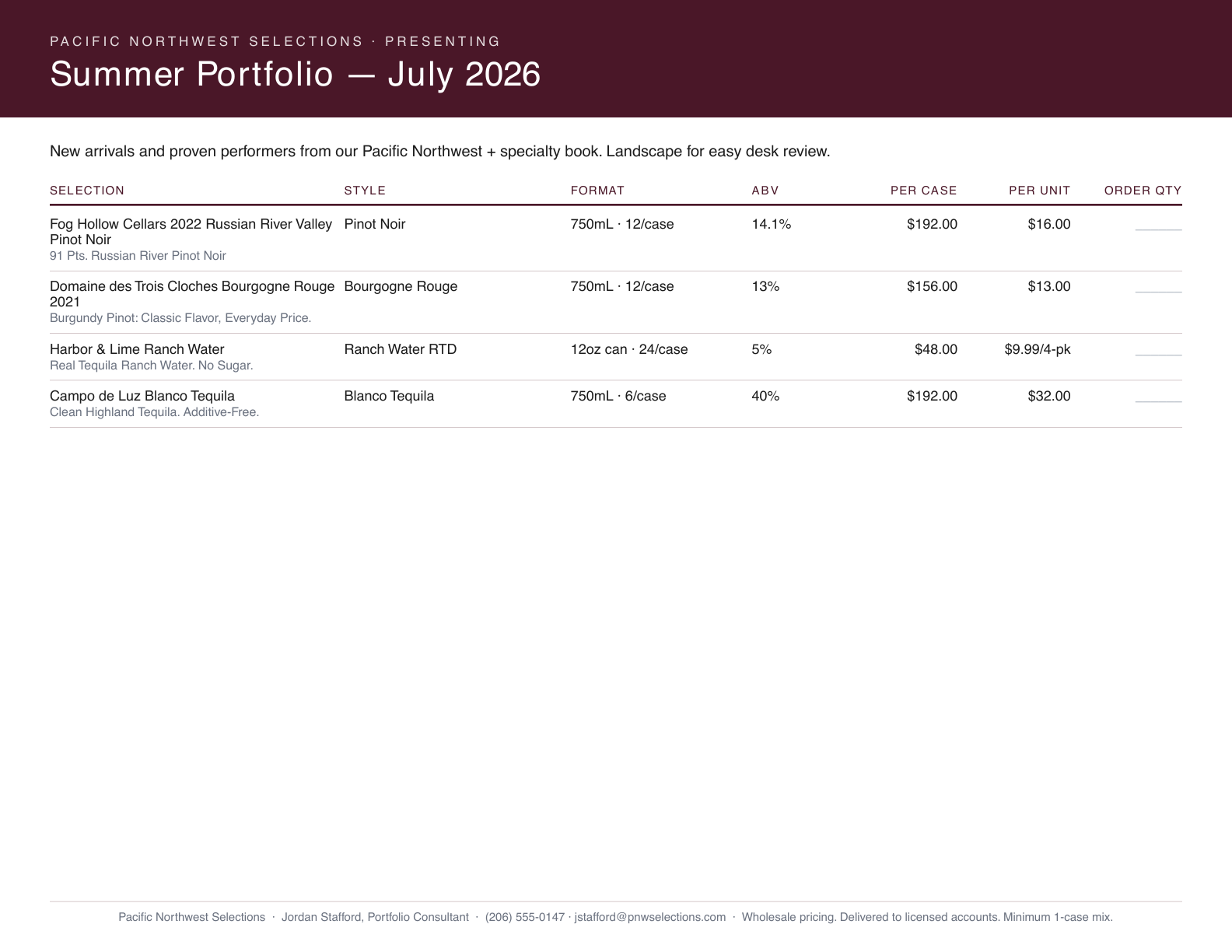
Four products. The rep's name, company, and contact information at the top. Trade pricing. Tasting notes in buyer-ready language — varietal, appellation, ABV, sensory profile, pairing suggestions — all structured, all on one page.
This is what a buyer actually needs at the moment they're deciding. By hand, building this document takes about an hour — hunting specs across email and Dropbox, copying tasting notes from producer PDFs, formatting everything so it doesn't look like it was thrown together in the parking lot. Then you do it again for the next call.
For most reps carrying a real book of business, it doesn't happen. They walk in with whatever the winery sent — a four-page PDF designed for a trade show — and hope the buyer is patient with the format.
This one took about a minute. And that 59-minute difference is the entire point.
The Sheet That Sells While You're Still Talking
There's nothing to explain when a clean sell sheet lands on the table. No "just ignore the winery header." No "I have the updated vintage somewhere." No apologies for the format.
The buyer picks it up. The specs are where they expect them. The tasting notes are in trade language. The pricing is right. The rep's contact info is at the top — so when they're building their list at the end of the day, they know exactly who to call.
That leave-behind does sales work after you've left the room. The buyer uses it to make the case internally, to verify the by-the-glass margin, to share with their floor staff. A clean, accurate, buyer-formatted one-pager travels through an account's decision process in a way that a stack of producer PDFs cannot.
And what the sheet says to the end customer — the person ordering from that menu or that shelf — is determined by the quality of the information the rep put in front of the buyer in the first place. Get those tasting notes right, in language a sommelier can translate to the floor, and the sell-through follows.
What a Trade-Ready Pour Sheet Actually Contains
A great sell sheet is built for one moment: a 45-minute buyer meeting where someone is tasting wines, deciding whether to carry them, and managing a dozen other things simultaneously. The document has one job — give them what they need, in the order they need it, findable at a glance.
The header block (above the fold): Producer name, wine name, vintage, varietal and blend composition, appellation and AVA, ABV, pricing. Labeled fields, not paragraphs. A buyer should be able to locate the appellation without reading a sentence.
Winemaking summary (brief): Harvest parameters, fermentation and aging approach. Three to five sentences in trade vocabulary. Not the brand story — the vocabulary for the conversation about why this wine belongs on the list.
Sensory profile (trade-formatted): Visual, nose, palate — in the language buyers and sommeliers actually use. "Structured tannins, bright acidity, and a long mineral finish" tells a sommelier how a wine performs in a by-the-glass program and gives them the language to sell it from there. Tasting room poetry does not.
Suggested pairings: Specific enough to be useful in a menu conversation. "Braised short rib, aged hard cheese, roasted root vegetables" is actionable for a chef or floor manager. "Pairs well with red meat" is not.
Commercial details: Production volume, availability, closure type, ordering information. This comes last because it comes last in a buyer's decision process — but it needs to be there, accurate, so the listing doesn't stall over logistics.
One Input, Three Formats
The sell sheet above came out of the same few minutes of work as everything else the account needs. Paste the tech sheet in, add your price — the one number Pour Sheet will never invent — and it writes all three formats from that single pass:
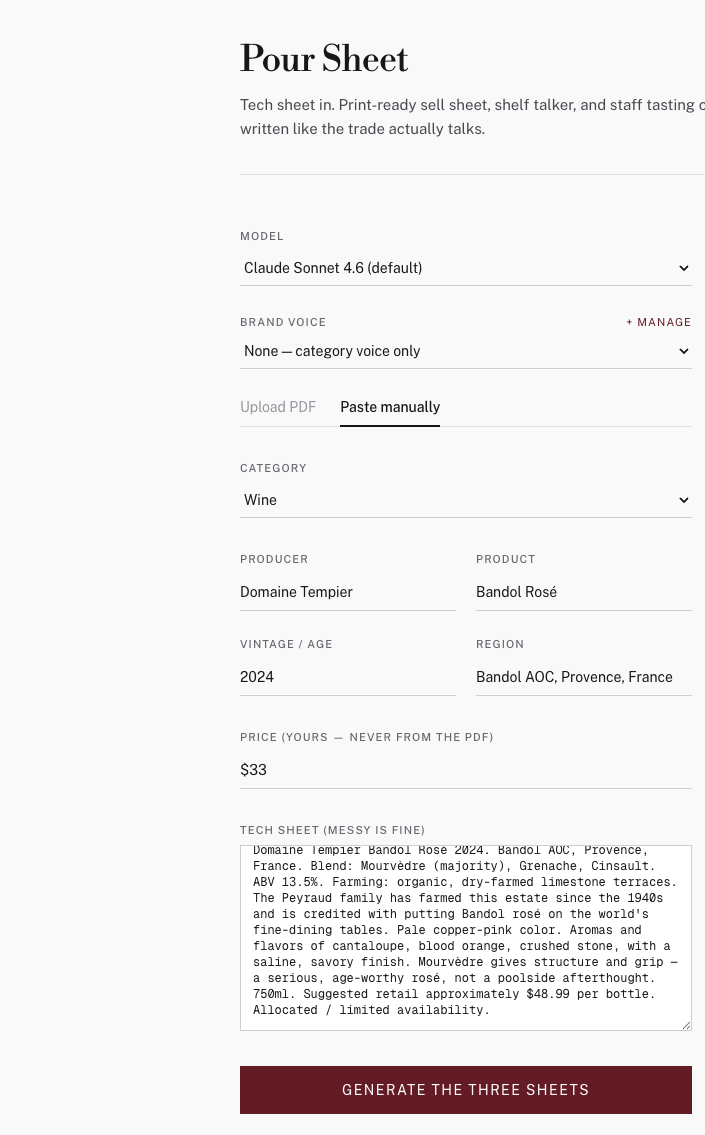
The buyer gets the sell sheet you already saw above. The shelf gets a shelf talker, sized to actually fit a shelf and short enough to read walking by:
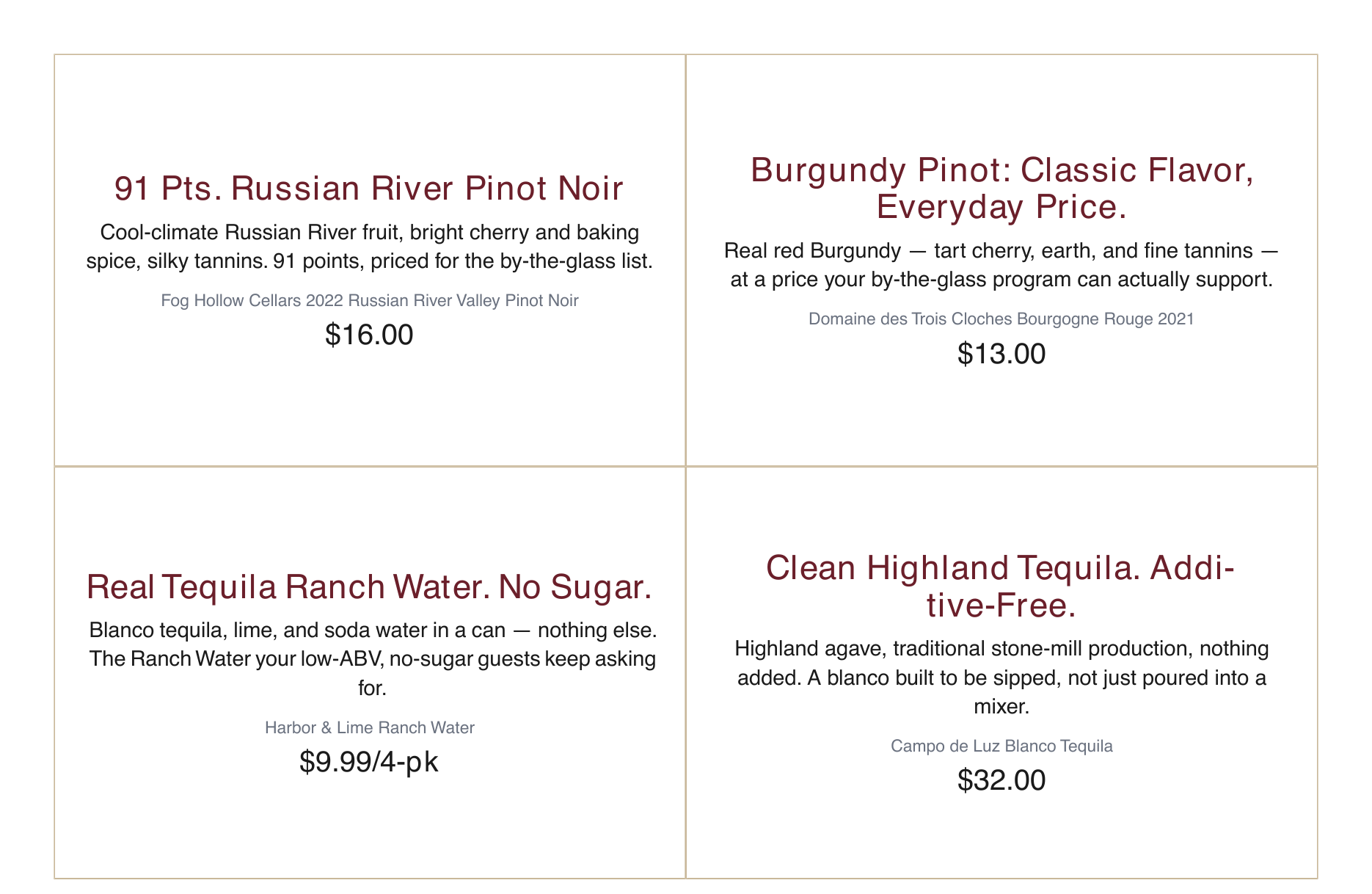
And the floor gets a staff tasting card — the line a server or sommelier actually says to a guest, not marketing copy dressed up as a script:
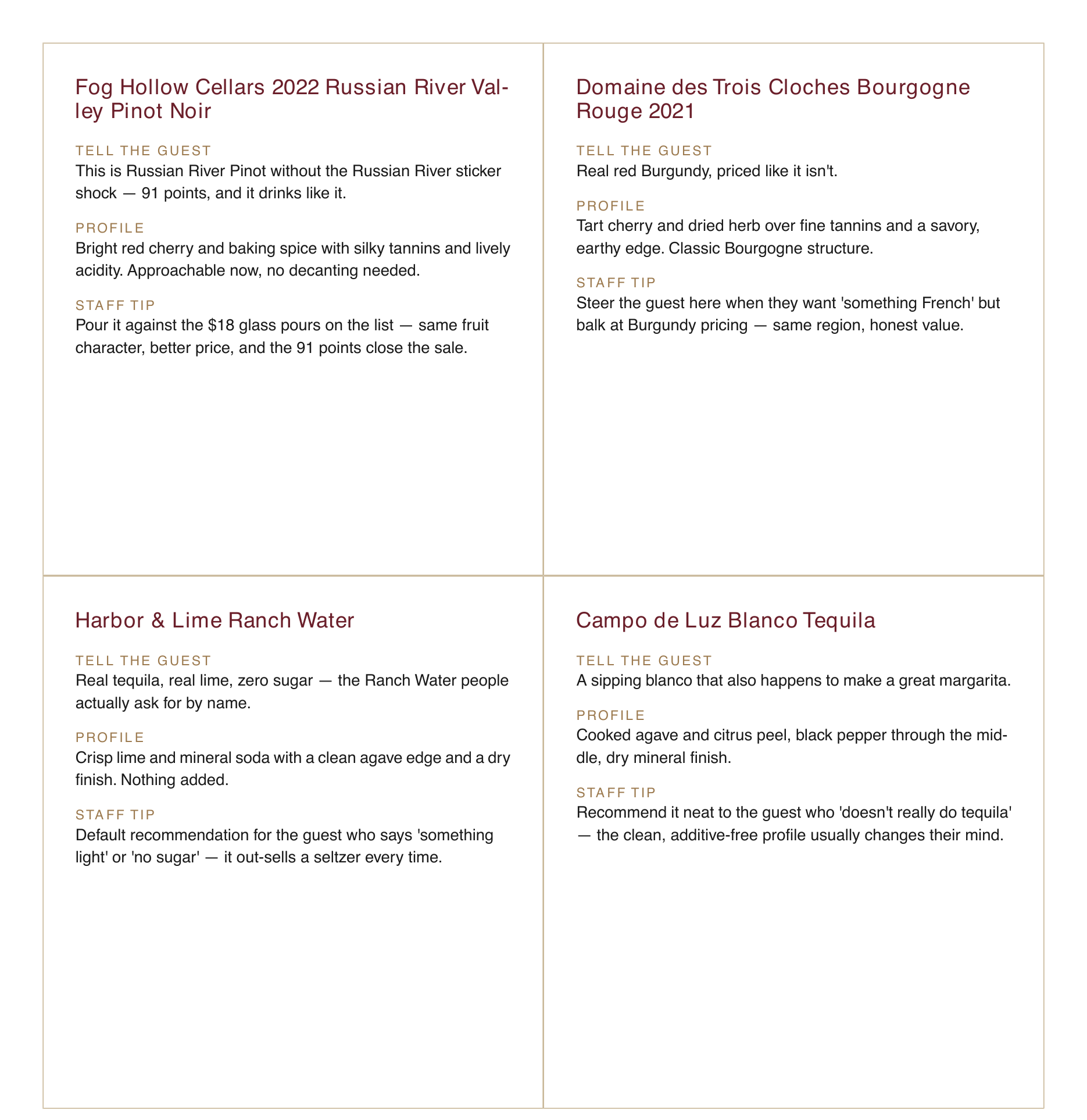
Same four products. Three formats built for three different readers, from one pass through the generator.
The Leave-Behind That Earns the Next Call
Buyers see a lot of reps. Most bring the same stack of winery PDFs. A few are more organized.
The rep who leaves behind something clean and professional — formatted, accurate, easy to reference when the buyer is building their order — earns a different kind of trust. Not just "this rep is diligent." The kind where, when something new lands in the portfolio, the buyer wants to be the first call because they already know the information is going to be right.
That trust builds over time. A clean pour sheet, every call, is how it starts. And each one takes about a minute.
Turn your PDF pile into a queryable portfolio.
5 sheets a month, free — no card required.
Open Pour Sheet